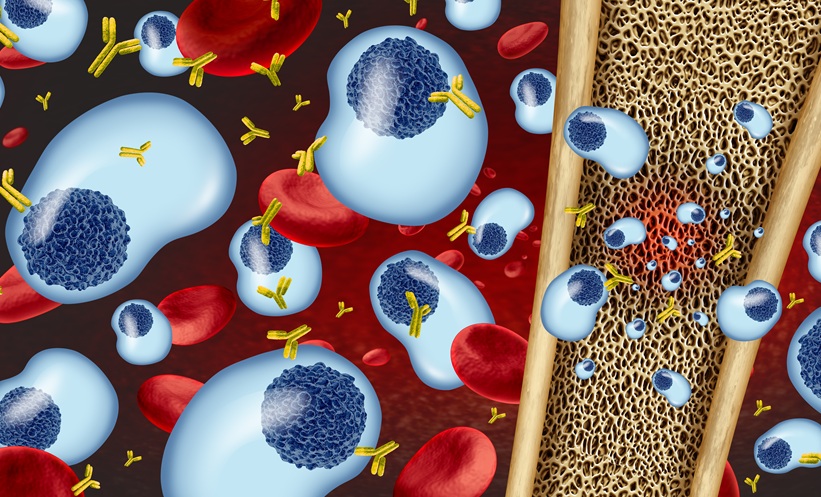
Etentamig in Relapsed/Refractory Multiple Myeloma: Pooled Phase 1 Data of an Investigational BCMA Bispecific Antibody
National Institutes of Health (NIH) | (.gov) (USA) · November 16, 2026, 11:37 PM
 mielomamultiplo.com · Multiple Myeloma
information · support · hope
It is always better to be an informed patient.
News, testimonies, a space to share ideas and links that help patients and carers understand the disease better and know where to find help.
Recent developments regarding the treatment and research of multiple myeloma indicate promising advances. [USA] A new bispecific antibody targeting BCMA is being tested in patients with relapsed multiple myeloma, while [UK] the inhibition of the NFIL3-MYC axis is emerging as a strategy to overcome therapeutic resistance. [Unidentified Country] New therapies, including CAR-T therapies and antibody combinations, are being approved, and FDA data analysis suggests the potential of Teclistamab with Daratumumab.
Made by MielomaAI On November 17, 2026, at 09:45, based on recent news. May contain errors. View news →
This page brings together the numbers from the treatment sheets to put them side by side. Note: each trial had different patients (some early in the disease, others after many treatments). The fairest comparison is always within the same trial, between the new treatment and the control. The choice of treatment is always made with your haematology team.
Time after which half of the patients still did not have their disease getting worse. Striped bar: not yet reached (more than half were still progression-free when the study was published). Dark bars: treatment studied; light bars: control arm.
First line (newly diagnosed patients)
Relapse (previously treated patients)
Sources: DETERMINATION — ASCO Post ↗ · CEPHEUS — CancerNetwork ↗ · CARTITUDE-4 — CancerNetwork ↗ · DREAMM-7 — Haematologica ↗ · CARTITUDE-1 — CancerNetwork ↗ · DREAMM-8 — CancerNetwork ↗ · SUCCESSOR-2 — IMF ↗ · KarMMa-3 — Blood ↗
Difference between the median progression-free time of the treatment studied and that of the control arm, in the same trial.
In CARTITUDE-4 (cilta-cel) and CEPHEUS (D-VRd) the new treatment has not yet reached the median, so the gain cannot be calculated yet (in CARTITUDE-4, the control arm was at 11.8 months).
Sorted by known efficacy (median progression-free time). Prices are US list prices, before discounts, converted to euros; in Portugal prices are confidential and, in the SNS, the patient does not pay for treatment.
| Treatment | Median progression-free time | List price (USA, in euros) | Cost per progression-free month* | How it is given |
|---|---|---|---|---|
| VRd (bortezomib, lenalidomida, dexametasona) | 46.2 months DETERMINATION, no immediate transplant | 166.298 € por ano | 13.858 € (enquanto dura) | Continuous cycles |
| Cilta-cel (Carvykti) — CAR-T | 34.9 months CARTITUDE-1 (after many treatments); in CARTITUDE-4 not yet reached | 502.452 € (uma vez) | 14.397 € | A single infusion |
| Ide-cel (Abecma) — CAR-T | 13.8 months KarMMa-3 | 478.024 € (uma vez) | 34.639 € | A single infusion |
| DRd (daratumumab, lenalidomida, dexametasona) | — — | 345.691 € por ano | 28.808 € (enquanto dura) | Continuous, until it stops working |
| Teclistamab (Tecvayli) — biespecífico | — — | 35.740 € por mês | 35.740 € (enquanto dura) | Weekly injection, then every two weeks |
| Elranatamab (Elrexfio) — biespecífico | — MagnetisMM-32: not yet reached | 37.550 € por mês | 37.550 € (enquanto dura) | Weekly injection, then every two weeks |
| Talquetamab (Talvey) — biespecífico | — — | 40.717 € por mês | 40.717 € (enquanto dura) | Weekly or two-weekly injection |
* For one-off treatments (CAR-T), the price divided by the median progression-free time; for continuous ones, the cost of each month of treatment. It is a simple calculation, only to give an idea: it does not include hospital stays, tests, transport or treatment of side effects, and the trial patients were different. In Portugal, an IPO Porto study calculated a median total cost of 355.165 € per patient treated with CAR-T (including hospital). Amounts converted to euros: €1 = 1.1052 dollars and 6.1748 reais (European Central Bank reference rates of 13/11 and 09/11/2026) and 0.8336 pounds (market rate of 05/11/2026). The original amounts are in the sources. More details in the tab Costs.
There is no single measure of how hard each treatment is. We show what is known objectively: how it is given, time in hospital, how long it lasts and the most frequent severe effect (grade 3 or higher) in the trials.
Most frequent severe effect (% of patients)
| Treatment | How it is given | Time in hospital | Duration |
|---|---|---|---|
| CAR-T (cilta-cel) | Blood collection, manufacturing, one infusion | Collection of 4 to 6 hours; infusion and daily monitoring in the first 2 weeks; stay near the hospital for about 4 weeks | Once |
| Bispecifics (teclistamab) | Injection under the skin | First doses with close monitoring; then a few minutes at the day hospital | Continuous, as long as it works |
| Bispecifics (elranatamab) | Injection under the skin | Like teclistamab | Continuous, as long as it works |
| Belantamab (BVd) | Infusion into a vein | About 30 minutes, every 3 weeks, and eye appointments | Continuous |
| D-VRd (first line) | Injections and tablets | Daratumumab: 3 to 5 minutes; bortezomib: a few minutes; the rest at home | Months of induction and then maintenance |
| Autologous transplant | High-dose chemotherapy and return of the cells | A hospital stay of about 2 to 3 weeks | Once (sometimes twice) |
Quality of life: in CARTITUDE-4, patients treated with cilta-cel reported clinically meaningful improvements in quality of life compared with standard treatment (Legend Biotech ↗). A one-off treatment (CAR-T, transplant) is harder at first but then leaves a period without treatment; continuous ones are lighter each time but mean regular hospital visits. Approximate times, taken from each treatment's film; they may vary from hospital to hospital. The side effects of each treatment are in the treatment sheets and in the sub-tab Trials.

Comprehensive and up-to-date news coverage, gathered from sources around the world by Google News.

Ben Derman: Top 10 Myeloma Abstracts to Be Presented at ASH 2026 / ASCO, ASH 2026, Ben Derman, cancer, CAR-T, DARA, Daratumumab, Lenalidomide, Mount Sinai

MRD is becoming a very valuable tool, but it's not an exclusive tool, says expert
All news → · Summaries created by MielomaAI; expand the article to read the original.

The symbol brings together two stories: that of the macedotuga.com, from Vila do Conde, and that of multiple myeloma.
It is always better to be an informed patient. There is hope. There is a way forward.