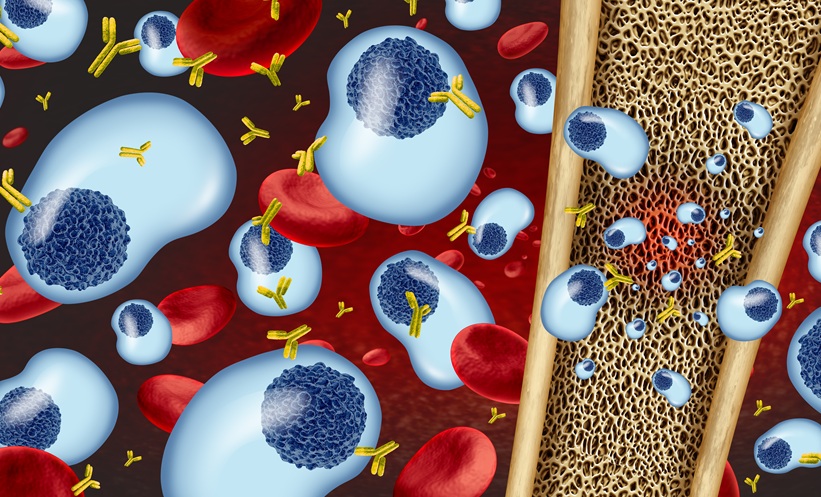
Etentamig in Relapsed/Refractory Multiple Myeloma: Pooled Phase 1 Data of an Investigational BCMA Bispecific Antibody
National Institutes of Health (NIH) | (.gov) (USA) · November 16, 2026, 11:37 PM
 mielomamultiplo.com · Multiple Myeloma
information · support · hope
It is always better to be an informed patient.
News, testimonies, a space to share ideas and links that help patients and carers understand the disease better and know where to find help.
Recent developments regarding the treatment and research of multiple myeloma indicate promising advances. [USA] A new bispecific antibody targeting BCMA is being tested in patients with relapsed multiple myeloma, while [UK] the inhibition of the NFIL3-MYC axis is emerging as a strategy to overcome therapeutic resistance. [Unidentified Country] New therapies, including CAR-T therapies and antibody combinations, are being approved, and FDA data analysis suggests the potential of Teclistamab with Daratumumab.
Made by MielomaAI On November 17, 2026, at 09:45, based on recent news. May contain errors. View news →
How myeloma starts, what signs you should know, and what tests and examinations the doctor will order to reach the diagnosis – including how bone marrow aspiration and biopsy are performed.
It often starts without giving any signs. The first symptoms are vague and resemble those of more common illnesses, which is why the diagnosis can take months.
A AnemiaLack of red blood cells or hemoglobin in the blood. Causes fatigue, paleness, and shortness of breath. � few red blood cells — causes fatigue that doesn't go away with rest, paleness and shortness of breath when climbing stairs. It’s one of the most frequent signs.
Very commonBack pain, rib pain, or pelvic pain that doesn't go away, that gets worse when you move, or that wakes you up at night. Sometimes a bone fractures with a small effort, or a vertebra “breaks down”.
Very commonPneumonia, urinary infections or areas that recur: myeloma takes the place of plasma cellsBlood cells that are born in the bone marrow and produce antibodies (immunoglobulins) to defend the body from infections. In multiple myeloma, an altered plasmacyte multiplies uncontrollably and all copies make the same antibody. Good, and there are not enough antibodies to defend the body.
Frequent appointmentsWhen bones release calcium into the blood: excessive thirst, frequent urination, constipation, nausea, drowsiness or confusion. This is a situation that needs to be addressed quickly.
High calciumThe proteins in myeloma can damage the kidneys. Sometimes you may notice foamy urine or swollen legs; often it is only seen in tests. creatinineSubstance that the kidneys eliminate. When it rises in the blood, the kidneys are not working properly. admission
Often without symptomsAnt bites on the feet and hands, unexplained weight loss, black or bleeding spots on the nose.
Less frequentThere is no screening for myeloma for the general population. It is often discovered incidentally, in a routine analysis with high total protein or high sedimentation rate, or when found during… MGUSMonoclonal gamopathy of undetermined significance. There is protein M (less than 3 g/dL) and less than 10% plasma cells in the bone marrow, without organ damage. It affects approximately 3 in 100 people over 50 years old, and most will never develop myeloma.Studies such as the iStopMMLarge study in Iceland that invited all the population over 40 to undergo tests to find MGUS and to see if screening helps.In Iceland, they are assessing whether it is worthwhile to track.
No general screeningWho has MGUSMonoclonal gamopathy of undetermined significance. There is protein M (less than 3 g/dL) and less than 10% plasma cells in the bone marrow, without organ damage. It affects approximately 3 in 100 people over 50 years old, and most will never develop myeloma. Multiple myeloma latentSmoldering myeloma: protein M of 3 g/dL or higher, or 10% to 60% plasma cells in the bone marrow, but without organ damage. Approximately 10% per year evolve to active myeloma in the first 5 years. Get regular screenings, as they are the steps before myeloma. Having a close relative with myeloma slightly increases the risk, but on its own, there is no recommended screening: talk to your doctor.
Monitoring with analysesIt's the blood test that counts the red blood cells and hemoglobin, the white blood cells and platelets. It's taken from the arm in just a few minutes. Shows the AnemiaLack of red blood cells or hemoglobin in the blood. Causes fatigue, paleness, and shortness of breath.But it’s not enough on its own to diagnose myeloma. It’s not a biopsy.
Blood test · minutesIn the same harvest, one measures creatinineSubstance that the kidneys eliminate. When it rises in the blood, the kidneys are not working properly. (kidneys), the calcium, the albumin, the beta-2 microglobulinProtein measured in the blood. High values indicate more disease and are included in the staging (ISS) calculation. e a LDHMeasured enzyme (lactate dehydrogenase). High values may indicate more active disease.They show if there is damage and help to determine the stage of the disease.
Same cropA protein electrophoresisAnalysis that separates proteins from the blood (or urine). In myeloma, a narrow “peak” appears: protein M., a ImmunofixationBlood or urine analysis that precisely identifies which protein M is present: the type of heavy chain (G, A, D, E, or M) and light chain (kappa or lambda). And as free catenaryLoose pieces of antibody floating in the blood. The two types (kappa and lambda) are measured, as well as the ratio between them; a very high alteration indicates a clone of plasma cells., in the blood, and often 24-hour urine. These tests find and measure the myeloma.
Blood and urineLow-dose whole-body TAC, MRI or PETPositron emission tomography (PET) scan that shows the areas of the body with very active cells. Helps to see lesions in the bones and disease outside the bone marrow.-CT scans look for lesions in the bones. They see much more than old X-rays.
Imaging testConfirmation is made in the bone marrowThe soft tissue inside the bones where blood cells are made: red blood cells, white blood cells, platelets, and plasma cells. It is examined with a bone marrow tap (bone marrow scan) or biopsy.It's almost always in the sacrum, behind (sacral crestThe back and top of the hip bone, near the waist. This is the usual location for bone marrow aspiration and biopsy.). With local anaesthesia, a needle aspirates a small amount of bone marrow fluid.bone marrow scanProcedure in which a needle is used to draw a small amount of liquid bone marrow (almost always from the pelvis, with local anesthesia) to examine the cells under a microscope.) and take a small bone cylinder (bone marrow biopsyA small bone cylinder with marrow is removed, in the same procedure as the plasmacytoma. It shows the quantity of plasma cells and how they are arranged.).
Around 15 to 30 minutesThe anesthesia can feel a little burned at the beginning. When the marrow is aspirated, you will feel a pressure or a strong but short pain. Afterwards, you may feel sore for 1 or 2 days. You can ask for a sedative beforehand. You will go home on the same day.
In clinicThe percentage of plasma cellsBlood cells that are born in the bone marrow and produce antibodies (immunoglobulins) to defend the body from infections. In multiple myeloma, an altered plasmacyte multiplies uncontrollably and all copies make the same antibody. and its appearance, and tests of the genetics of the myeloma cellsFISHBone marrow cell myeloma gene test, performed on the sample. Looks for chromosome changes that indicate whether the disease is high risk.) that show if it is high risk.
Results in 1 to 3 weeksIf you have bone pain that doesn’t go away, fatigue and infections that keep recurring, ask your family doctor if it makes sense to request a protein electrophoresisAnalysis that separates proteins from the blood (or urine). In myeloma, a narrow “peak” appears: protein M.An early diagnosis protects the bones and kidneys. There is hope, there is a way.
These symptoms may have many other causes, almost always simpler. They do not replace a consultation: if you recognize yourself here, speak to your doctor. Source: NHS — Multiple myeloma (sintomas e diagnóstico); critérios do IMWG (Rajkumar et al., Lancet Oncology 2014) ↗ · This does not replace the explanation from your medical team.
Many patients have several at the same time; some have none and the disease is discovered in an analysis. All of these symptoms can have other causes, almost always simpler.
| Symptom | Why does it happen? | Frequency |
|---|---|---|
| Fatigue, paleness, shortness of breath | AnaemiaLack of red blood cells or hemoglobin in the blood. Causes fatigue, paleness, and shortness of breath.It’s important to note that myeloma occupies… bone marrowThe soft tissue inside the bones where blood cells are made: red blood cells, white blood cells, platelets, and plasma cells. It is examined with a bone marrow tap (bone marrow scan) or biopsy. fewer red blood cells are produced. | Very common |
| Bone pain (back, ribs, pelvis), fractures | The myeloma cells activate the cells that “eat” bone and create holes (lytic lesions). | Very common |
| Recurring infections | Normal antibodies are missing; the defenses become weaker. | Frequent appointments |
| Foamy urine, swollen legs, high creatinine | These proteins (mainly the… fusion clampsThe smallest fragments of an antibody. There are two types, kappa and lambda. They are measured in the blood using the free light chain test; a significantly altered kappa/lambda ratio indicates a plasma cell clone.) impair the kidneys. | Frequent appointments |
| Headache, frequent urination, constipation, confusion | High calcium in the blood, released by the bones. | Less frequent |
| Ant bites on the feet and hands | A protein MMonoclonal protein: the antibody (or antibody fragment) that is identically produced by myeloma cells. It is measured in the blood and urine and is used to see if the treatment is working. It can affect the nerves; it is also common in Amyloidosis ALDisease in which the light chains misfold and deposit themselves in the organs (heart, kidneys, nerves), damaging them. It can exist on its own or with multiple myeloma.. | Less frequent |
| Weight loss, sweating, fever without infection | General symptoms; less frequent. | Less frequent |
| Black spots, bleeding from the nose | Few platelets, or “thick” blood (hyperviscosity, more in IgA). | Less frequent |
The doctors summarize the myeloma damage with the abbreviation. CRABThe English acronym for the 4 typical damages of myeloma: C for high calcium in the blood, R for kidneys (kidney failure), A for anemia, and B for bone, i.e., lesions in the bones. Just one of these is enough to speak of active myeloma.High calcium, kidneys, anemia, and bones.
There isn't, in Portugal or elsewhere, a screening for myeloma for the general population, as there is for breast cancer or colorectal cancer. The disease is often discovered in routine tests: high total proteins or high sedimentation rate, unexplained anemia, or creatinine rising. In these cases, the next step is protein electrophoresisAnalysis that separates proteins from the blood (or urine). In myeloma, a narrow “peak” appears: protein M..
Who is being monitored: Who has MGUSMonoclonal gamopathy of undetermined significance. There is protein M (less than 3 g/dL) and less than 10% plasma cells in the bone marrow, without organ damage. It affects approximately 3 in 100 people over 50 years old, and most will never develop myeloma. Multiple myeloma latentSmoldering myeloma: protein M of 3 g/dL or higher, or 10% to 60% plasma cells in the bone marrow, but without organ damage. Approximately 10% per year evolve to active myeloma in the first 5 years. Have regular tests (every 3 months to once a year, depending on the risk), as these are the phases before myeloma. Having a father, mother, or brother with myeloma slightly increases the risk, but there is no recommendation for screening solely because of this: talk to your family doctor.
Research: the study iStopMMLarge study in Iceland that invited all the population over 40 to undergo tests to find MGUS and to see if screening helps.In Iceland, the entire population over 40 years old has been invited to undergo testing; others, such as PROMISE in the USA, are studying people at higher risk. It is still unknown whether screening everyone leads to a longer life.
The blood count is not a biopsy. The blood test is a sample taken from the arm. The bone marrow biopsy is performed into the bone marrow, inside the hip bone. The two are requested, but they are very different tests.
| Test | What does it show? | How to do it | How are you feeling? |
|---|---|---|---|
| Complete Blood Count | Red blood cells and hemoglobin (AnemiaLack of red blood cells or hemoglobin in the blood. Causes fatigue, paleness, and shortness of breath.Increased levels of white blood cells and platelets. | Blood draw in the arm. | A sting; a few minutes. |
| Biochemistry | CreatinineSubstance that the kidneys eliminate. When it rises in the blood, the kidneys are not working properly. (kidneys), calcium, albumin beta-2 microglobulinProtein measured in the blood. High values indicate more disease and are included in the staging (ISS) calculation., LDHMeasured enzyme (lactate dehydrogenase). High values may indicate more active disease.Total proteins. | In the same harvest. | Same. |
| Protein electrophoresis | Looking for and measuring the peak of protein MMonoclonal protein: the antibody (or antibody fragment) that is identically produced by myeloma cells. It is measured in the blood and urine and is used to see if the treatment is working.. | In the same harvest. | Same. |
| Immunofixation | Tell us what it is. protein MMonoclonal protein: the antibody (or antibody fragment) that is identically produced by myeloma cells. It is measured in the blood and urine and is used to see if the treatment is working. (IgG, IgA…) kappaOne of the two light chain types. Approximately 2 in every 3 multiple myeloma cases are kappa. or That's a good question.One of the two light chain types. Approximately 1 in every 3 multiple myeloma cases is lambda; it is also the most common type in AL amyloidosis.). | In the same harvest. | Same. |
| Free LSCs | Measure kappaOne of the two light chain types. Approximately 2 in every 3 multiple myeloma cases are kappa. e That's a good question.One of the two light chain types. Approximately 1 in every 3 multiple myeloma cases is lambda; it is also the most common type in AL amyloidosis. and the ratio between them; essential in myeloma fusion clampsThe smallest fragments of an antibody. There are two types, kappa and lambda. They are measured in the blood using the free light chain test; a significantly altered kappa/lambda ratio indicates a plasma cell clone.. | In the same harvest. | Same. |
| Test | What does it show? | How to do it | How are you feeling? |
|---|---|---|---|
| 24-hour urine | Protein Bence JonesOld term for light chains found in urine. It comes from the English doctor who described them in the 19th century. (fusion clampsThe smallest fragments of an antibody. There are two types, kappa and lambda. They are measured in the blood using the free light chain test; a significantly altered kappa/lambda ratio indicates a plasma cell clone.) and how much protein is lost by the kidneys. | Collect all of your urine for one day in a large container. | No pain; just tiring. |
| Test | What does it show? | How to do it | How are you feeling? |
|---|---|---|---|
| Low-dose whole-body TAC | Bone fractures, even small ones. | Lying on a table that goes around a ring. | No pain; about 10 minutes. |
| MRI | The spine and pelvic bone; injuries that haven't yet destroyed bone; nerve compression. | Inside a tube, with noise. | No pain; 30 to 45 minutes; may be difficult for those who fear enclosed spaces. |
| PET-CT | Active areas with very active cells, inside and outside the bones (useful in plasma cell tumorA tumor formed by plasma cells in one location. It can be in a bone (osseous) or in soft tissue, such as the nose or throat (extramedullary). And in... extramedullary diseaseMultiple myeloma with extramedullary deposits in organs or soft tissues, away from the bones (skin, liver, lymph nodes, nervous system). This indicates a more aggressive disease.). | Injection of a labelled sugar and, about an hour later, the test. | A prick; about 2 hours in total; fasting beforehand. |
| Test | What does it show? | How to do it | How are you feeling? |
|---|---|---|---|
| Bone marrow aspirate | Percentage and appearance of plasma cellsBlood cells that are born in the bone marrow and produce antibodies (immunoglobulins) to defend the body from infections. In multiple myeloma, an altered plasmacyte multiplies uncontrollably and all copies make the same antibody.flow cytometry FISHBone marrow cell myeloma gene test, performed on the sample. Looks for chromosome changes that indicate whether the disease is high risk. (genetics) and, later, minimal residual disease. | Needle in the bag, behind, with local anesthesia; a small amount of liquid marrow is aspirated. | Burning from the anesthesia and a strong but short pain when aspirating. |
| Bone marrow biopsy | A small bone cylinder with marrow: quantity and arrangement plasma cellsBlood cells that are born in the bone marrow and produce antibodies (immunoglobulins) to defend the body from infections. In multiple myeloma, an altered plasmacyte multiplies uncontrollably and all copies make the same antibody.. | In the same prick, with a slightly larger needle. | Pressure; pain for 1 or 2 days; in clinic. |
These tests are repeated throughout treatment to see if they are working (the M protein and light chains are decreasing) and if the body is tolerating them (blood counts, kidneys, liver).
Notify the hospital if the dressing becomes soaked in blood, if you have a fever, or if the pain increases instead of decreases.
Go to the emergency room if you have: weakness or numbness in the legs, or loss of control of urine or stools (a vertebra being pressed on the spinal cord); severe confusion or drowsiness; excessive thirst with vomiting; passing very little urine; high fever; or sudden, severe back pain.

Comprehensive and up-to-date news coverage, gathered from sources around the world by Google News.

Ben Derman: Top 10 Myeloma Abstracts to Be Presented at ASH 2026 / ASCO, ASH 2026, Ben Derman, cancer, CAR-T, DARA, Daratumumab, Lenalidomide, Mount Sinai

MRD is becoming a very valuable tool, but it's not an exclusive tool, says expert
All news → · Summaries created by MielomaAI; expand the article to read the original.

The symbol brings together two stories: that of the macedotuga.com, from Vila do Conde, and that of multiple myeloma.
It is always better to be an informed patient. There is hope. There is a way forward.