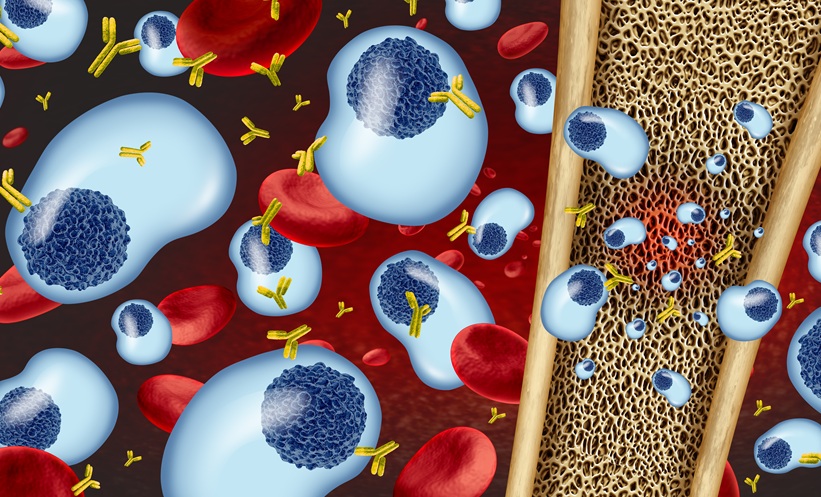
Etentamig in Relapsed/Refractory Multiple Myeloma: Pooled Phase 1 Data of an Investigational BCMA Bispecific Antibody
National Institutes of Health (NIH) | (.gov) (USA) · November 16, 2026, 11:37 PM
 mielomamultiplo.com · Multiple Myeloma
information · support · hope
It is always better to be an informed patient.
News, testimonies, a space to share ideas and links that help patients and carers understand the disease better and know where to find help.
Recent developments regarding the treatment and research of multiple myeloma indicate promising advances. [USA] A new bispecific antibody targeting BCMA is being tested in patients with relapsed multiple myeloma, while [UK] the inhibition of the NFIL3-MYC axis is emerging as a strategy to overcome therapeutic resistance. [Unidentified Country] New therapies, including CAR-T therapies and antibody combinations, are being approved, and FDA data analysis suggests the potential of Teclistamab with Daratumumab.
Made by MielomaAI On November 17, 2026, at 09:45, based on recent news. May contain errors. View news →
Before a new medication is covered by the health service, it InfarmedThe Portuguese Medicines Agency. It assesses whether a new medicine brings benefit compared to what already exists and whether the price is fair before the National Health Service pays for it. assess two things: It's better Given the existing treatments and does the price make sense. For Carvykti (ciltacabtagene autoleucel). This is a typo. Please provide the correct text to translate.CAR-T therapy by Janssen, the public report was published on May 30, 2025.
Adults with multiple myeloma in relapse and refractory who have already received at least 3 treatments, including one immunomodulatorCapsules such as lenalidomide or pomalidomide., um proteasome inhibitorMedicaments such as bortezomib or carfilzomib. And that's it. anti-CD38Antibodies such as daratumumab or isatuximab.and whose disease has progressed again.
Approved for use in SNS hospitals (decision of May 26, 2025), following a price negotiation with Janssen, formalized in a contract.
Added therapeutic valueHow much better is the new medicine than the usual treatment? The Infarmed classifies it (for example: greater, considerable, smaller, without added value). LargerWith quality of the test ModerateBut, at that price… was not cost-effectiveIt was necessary to lower the price.
The ideal is a randomized trialStudy in which patients are randomly assigned to receive the new or standard treatment. Because the groups are similar due to the randomization, the differences in results come from the treatment.In which patients are randomly selected for the new or standard treatment. The study of Carvykti in this indication, CARTITUDE-1, there was no comparator group: the 97 patients who received the planned dose all received CAR-T (study of single armStudy in which all patients receive the same treatment, without a comparison group.).
To find out if CAR-T is better, Janssen compared it with the LocoMMotion: 248 real patients, in 76 hospitals across 10 countries, treated with what the doctor chose (a treatment chosen by the doctorThe usual treatments used in clinical practice for patients at this stage, chosen on a case-by-case basis.). But these are two different studies with different patients. Comparing the results directly would be unfair. It is necessary sort out the differences among patients before comparing: it is called indirect comparison, adjusted, unanchoredNonspecific: the two treatments were not compared in the same study. Adjusted: attempts are made to account for differences between patients. Unanchored: there is no common treatment between the two studies that serves as a bridge, therefore the risk of error is greater..
Figure 1 of the report is a “decision map” for choosing the statistical method. We redrew it in Portuguese. chosen path methods used to confirm (sensitivity analyses)
Two more tests were carried out to confirm.sensitivity analysesRepeat the comparison with other methods to see if the result remains the same. If it remains the same, the conclusion is more secure.): a Overlap assessment (OA)which best balanced the characteristics but left only about 54 patients effective in each study, and Multivariate regression With 17 characteristics. The results were similar to those of the main method.
| CAR-T (CARTITUDE-1) | Standard Therapy (LocoMMotion) | What does that mean? | |
|---|---|---|---|
| Survival without progressionTime a patient lives before multiple myeloma progresses again. (median) | 28 months | 4 months | HRHazard ratio: compares the risk of an event (progression or death) between two groups. An HR of 0.19 means a risk approximately 81% lower with the new treatment, at each time point. 0.19: risk of the disease progressing or dying approximately 81% lower |
| No progression after 1 year | 70% | 14% | 7 out of 10 versus 1 out of 7 |
| Global survivalTime since treatment began, regardless of what happens. (median) | Not yet achieved | 11.8 months | HR 0.32: risk of death approximately 68% lower |
| Alive after 1 year | 81% | 49% | 8 out of 10 against half |
| Treatment response | 84% | 19% | approximately four times more responses |
| Here's the complete answer. | 82,5% | 0,4% | almost CAR-T only (comparison without adjustment) |
Still not reached” means that by the end of the follow-up, over half of the patients with CAR-T were still alive, so the median is still unknown.
Side effects: With CAR-T, there were more serious adverse events (grade 3-4: 94% versus 49%), primarily representing drops in blood cells (neutrophils, platelets, red blood cells), which increases the risk of infection. Deaths due to adverse events were similar (6.2% versus 7.7%). These numbers were not adjusted.
Quality of life: The data did not allow us to conclude whether it was better or worse.
The Infarmed concluded that Carvykti has enhanced therapeutic valueIt’s living longer and without progression, and there are far more answers. The trial started as “low” (because there was no randomization), but it rose to Moderate For the benefit to be so great.
In the economic assessment (a model that follows patients up to the age of 100), the requested price gave a cost per year gainedIncremental cost-effectiveness ratio (ICER): how much more it costs to treat with the new treatment for each year of life gained with quality. If it is too high, the medicine is not considered cost-effective. very high. The committee recommended a substantial price reductionFollowing negotiation, the SNS began to fund the treatment through a contract. The report does not disclose the figures.
In Portugal, Carvykti is covered by the SNS (National Health Service) in hospitals for patients who have already completed at least 3 lines of treatment (with an immunomodulator, a proteasome inhibitor, and an anti-CD38 antibody). This assessment does not cover earlier uses, which require individual evaluation. If you think you may be eligible, speak to your hematology team. You can also see… CAR-T movie And the types of myeloma.
Source: Public assessment report of Carvykti, Infarmed (05/30/2025) ↗The numbers are from the report; the explanations are simplified by the website and do not replace your medical team.

Comprehensive and up-to-date news coverage, gathered from sources around the world by Google News.

Ben Derman: Top 10 Myeloma Abstracts to Be Presented at ASH 2026 / ASCO, ASH 2026, Ben Derman, cancer, CAR-T, DARA, Daratumumab, Lenalidomide, Mount Sinai

MRD is becoming a very valuable tool, but it's not an exclusive tool, says expert
All news → · Summaries created by MielomaAI; expand the article to read the original.

The symbol brings together two stories: that of the macedotuga.com, from Vila do Conde, and that of multiple myeloma.
It is always better to be an informed patient. There is hope. There is a way forward.